Air compressor oil separator plays a key role in maintaining stable operation and prolonging the life of the entire compressed air system. Not only does it help the compressed air to be cleaner and reduce the risk of damage, this filter also ensures the working efficiency of related equipment, thereby saving long-term operating and maintenance costs.
The role of oil separators in compressed air systems
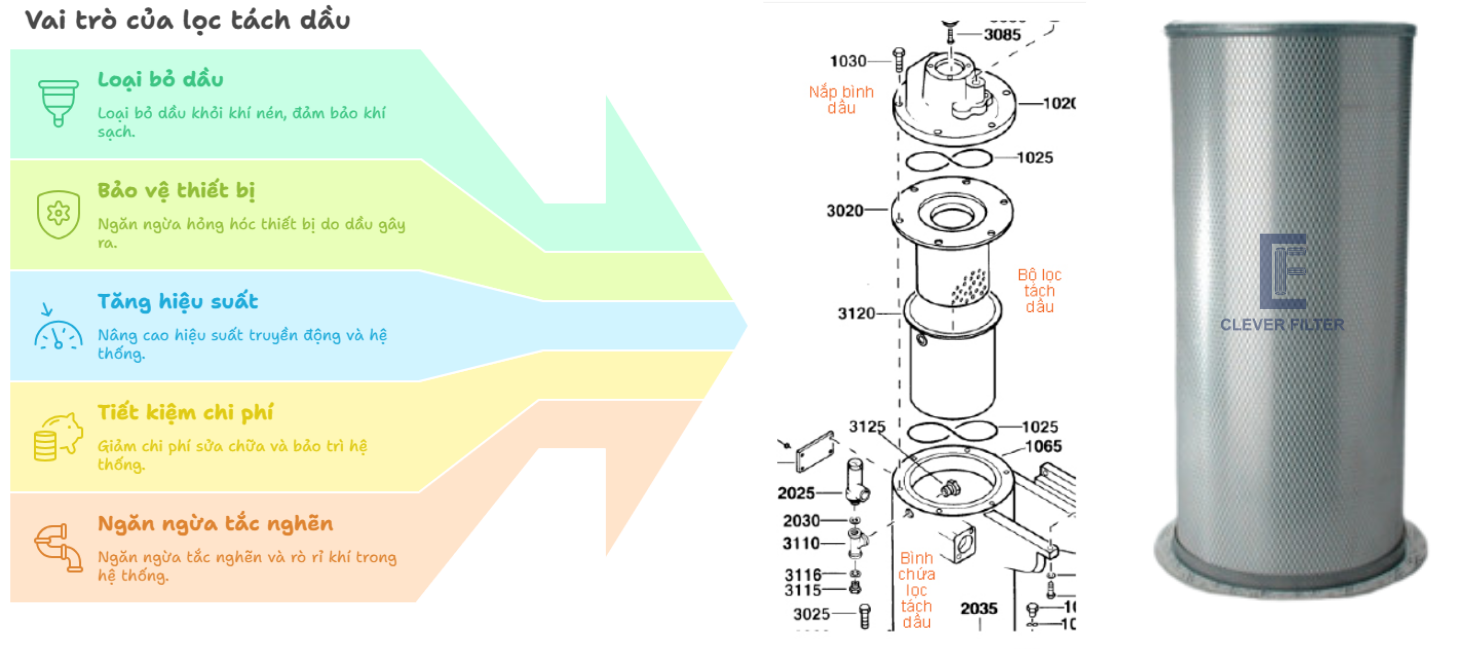
During operation, the oil-injected screw air compressor will create a mixture of gas and oil, some of which remains in the gas after the compression process. The oil separator plays a key role in removing this oil from the compressed air stream, helping to ensure that the output gas is clean and free of oil, thereby protecting the equipment using the cleaned gas from damage caused by oil.
Maintaining the cleanliness of compressed air not only helps improve transmission efficiency, minimize operational disorders of other pneumatic devices such as control valves, cylinders, or other automatic systems, but also helps save costs related to repair, cleaning and maintenance. In addition, oil separators also help limit oil accumulation in parts of the air system, prevent clogging, air leakage and reduce energy loss.
Unlike other types of filters, such as air filters or oil filters which primarily remove dirt, impurities, or sludge from oil or gas oil separators focus on separating and retaining oil in the compressed air stream as efficiently as possible. As a result, without a properly functioning oil separator, the compressed air will not be clean, which can easily damage pressure equipment and reduce the life of the entire compressed air system.
Distinguishing between oil separators and other types of filters
In the compressed air system, there are many different types of filters, each with a separate function to ensure that the compressed air meets clean and safe standards. To avoid confusion and loss of resources, operators need to clearly distinguish between oil separators and other types of filters such as oil filters, air filters, or air filters.
Oil filters are primarily focused on removing dirt and impurities from the oil used in the system. This step helps protect lubricating parts, engines, and hydraulic components from spillage or contamination. Meanwhile, oil separators are specifically tasked with separating oil from compressed air during compression to prevent oil remaining in the air from escaping.
In addition, air filters are often used to remove dust, microorganisms, fine dust or impurities from the outside into the compressed air system. They are often used in harsh working conditions or requiring high levels of clean air .
This clear distinction helps operators choose the right type of filter for each stage of the system, avoiding wasted costs and ensuring the highest efficiency during the operation and maintenance of the air compressor.
Location and structure of oil separator filter
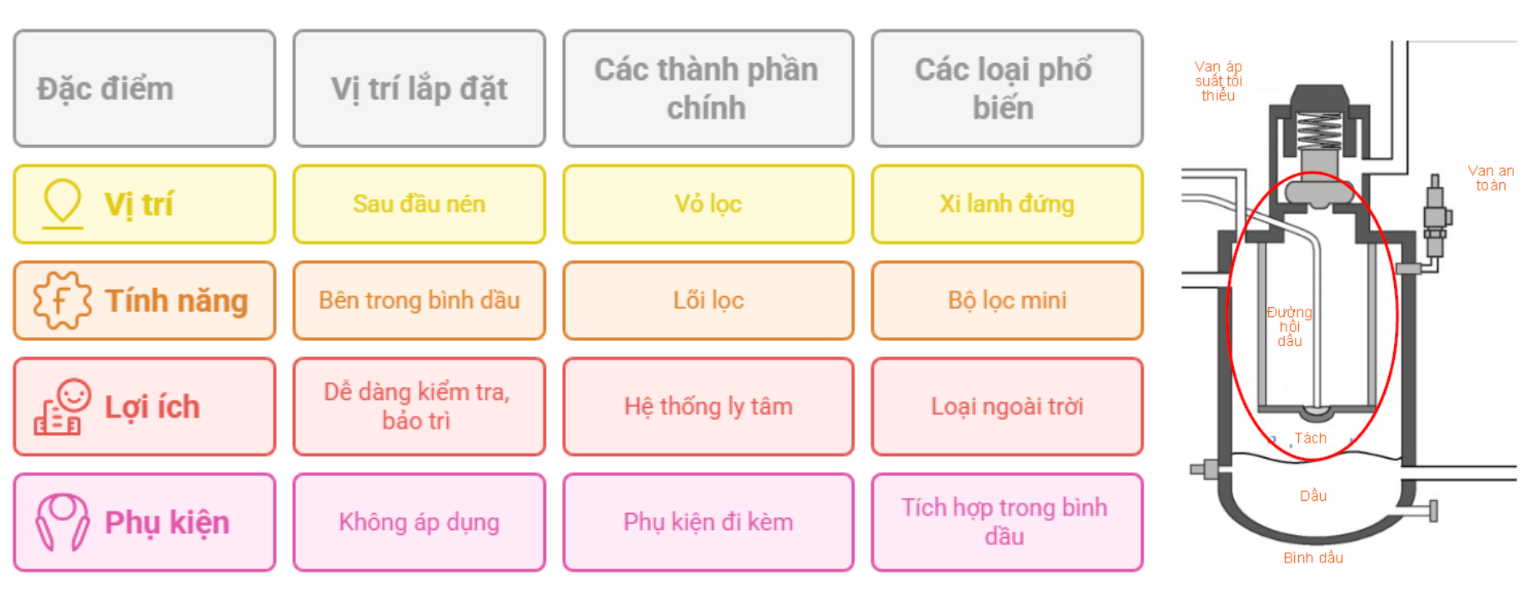
Location of oil separator filter installation in air compressor system
In the compressed air system, the oil separator filter is usually installed behind the compressor head or right in the oil tank of the oil-injected screw air compressor. Due to the characteristics of the air compression process, the compressed air will contain a mixture of oil and gas after going through the compression steps, so the filter needs to be arranged in the air intake room to ensure that the air coming out of the machine is clean and has the least amount of oil.
Typically, oil separators are installed directly after the compressor or at intermediate points to optimize oil separation. In small equipment or small air compressors, the filter can be mounted directly in the oil tank or in the connection, while large systems often have peripheral filters suitable for industrial requirements.
Reasonable installation location makes it easy to check, maintain, clean or replace the filter when needed. At the same time, it also helps to minimize the accumulation of excess oil in the system, limit leakage or loss of oil-containing gas causing environmental pollution and affecting auxiliary equipment.
Main components of oil separator filter
Oil separator filters consist of many important components to ensure efficient and stable oil separation function. The main parts of the filter usually include:
- Filter housing: Usually made of metal or anti-corrosion alloy, resistant to high pressure to protect internal components from external agents and ensure long-term durability.
- Filter core or filter membrane: The central part responsible for retaining oil and small dust particles in compressed air. This type of core can be made of metal mesh, glass fiber or activated carbon material, depending on the filtration efficiency requirements.
- Centrifugal or Separator Systems: These components help create force to separate oil from gas based on the principle of centrifugal force, which helps separate oil more effectively than conventional straight filtration.
- Accessories included: Such as discharge valves, regulating valves, rubber gaskets or pressure testing devices, making operation, cleaning or replacement easier.
The close coordination between these components will help the filter operate effectively, maintain optimal oil separation capacity, contribute to prolonging the life of the air compressor and improving operating efficiency.
Common forms of oil separators on the market
Currently, there are many types of oil separators on the market suitable for different scales, capacities, and operating requirements, from compact equipment for light industry to high-heavy industrial systems. Common forms include:
- Vertical cylindrical oil separators: Usually have a round cylindrical design, easy to install and disassemble for cleaning or replacement. This type is suitable for small or medium-sized systems, can be installed inside or outside the machine.
- Mini oil separator: Compact, used in small air compressors, suitable for small and medium enterprises or for backup.
- Outdoor type oil separator: For large industrial systems, designed to withstand harsh outdoor conditions, capable of continuous operation at high capacity.
- Integrated oil separator in oil tank: Suitable for small air compressors, saving space and improving convenience during maintenance.
Each type has its own characteristics and applications. Operators need to choose the right type to suit their requirements, ensuring long-term efficiency of the pneumatic system as well as optimizing costs.
How oil separator works

Principle of oil separation by centrifugal force
The working principle of the oil separator is mainly based on centrifugal force, one of the most effective methods to separate small oil droplets from compressed air. When the oil-gas mixture enters the filter through a rotating chamber, the centrifugal force creates a uniform dispersion, helping to miss the remaining oil in the air.
In this process, compressed air moves in a cylindrical or circular chamber at high speed, causing the oil to be pushed out by the impact force, falling to the bottom for recovery. This is a continuous process, in which the separated oil will be retained, then led back to the oil tank or oil return system.
This mechanism is particularly effective in handling most of the remaining oil in the air, minimizing the amount of oil mixed with the escaping air, contributing to improving the quality of compressed air. Thanks to this principle, the compressed air system operates more stably, with less disturbance and reduces the risk of equipment damage.
Oil and compressed air separation process at the filter
During operation, the oil-gas mixture will pass through the filter, where the components responsible for separating the oil work continuously. When the gas permeates through the filter membranes or filter cores, small oil and mist-like solutions will be retained, while the clean gas will escape through the exhaust pipe.
With centrifugal oil separators, this process takes place continuously thanks to the rotation of the separation mechanisms, preventing oil and gas from re-mixing. The remaining oil, after escaping from the gas, will be collected at the bottom, processed and then circulated back into the system or safely discharged to avoid polluting the environment.
In addition, the remaining oil in the air, about 15% in the form of mist, will also be processed by the filter, combined with auxiliary filter cores to minimize toxins, moisture or dirt. The more precise this process is, the higher the compressed air will meet the strict requirements of modern industrial compressed air systems.
The time when oil remains after filtration and affects the system
During operation, very small residual oil, in the form of mist or tiny oil droplets, can accumulate and gradually accumulate over time if not effectively removed. If the oil separator filter does not work properly or exceeds the specified replacement time, this phenomenon will increase, causing adverse effects on the system.
The most obvious signs are that the gas released is cloudy, has an oily smell, or that the gas does not meet standards for humidity and pressure. This can lead to oil leakage through the pipeline system, causing loss of efficiency and the risk of fire or explosion or damage to components such as valves, cylinders, and gas controllers.
In addition, a lot of residual oil in the filter or circulating parts causes oil adhesion, reducing the life of the accompanying equipment, such as slides, bearings, or hydraulic components. Therefore, periodic inspection, cleaning or timely replacement of the filter when the above signs appear will help the system operate continuously, optimally and minimize the risk of damage.
Recognize when the oil separator is damaged

Identification by color, weight and condition of the filter
When an oil filter is no longer working effectively, the signs are quite obvious. Typically, a dirty or damaged oil filter will change color, turning dark brown or black, indicating excessive oil buildup.
The weight of the filter also increases significantly due to the oil deposition being more than normal. The external condition of the filter may appear to have tears, rust or signs of mechanical damage such as distortion of the housing, causing loss of pressure resistance.
If the old filter is not cleaned or replaced for a long time, the compressed air released may have a strong oil smell, causing discomfort and reducing the operating efficiency of the equipment. Therefore, checking the color, weight and appearance of the filter periodically will help detect problems early, thereby making timely treatment decisions.
Problems caused by dirty or damaged oil filters
When the oil separator filter is dirty or damaged, the first consequence is that the compressed air is contaminated with oil, moisture or dirt, directly affecting the productivity and durability of compressed air equipment.
In addition, this condition also increases the pressure of the system, causing overheating, vibration or gas leakage. In severe cases, the oil is no longer completely separated and will contaminate the system components, causing blockage, corrosion, leakage or gas explosion.
The long-term consequences are reduced compressor life, reduced operating efficiency and increased repair and replacement costs. Therefore, early warning signs such as color, odor, and excess oil must be considered and treated immediately to ensure continuous and safe operation of the compressed air system.
Measure differential pressure to detect oil separator problems
During operation, measuring the pressure difference between the two ends of the filter is an accurate method to check the operating condition of the oil separator . Normally, the pressure difference does not exceed 0.2 – 0.3 bar when the machine is running under load.
If the differential pressure is found to exceed this threshold, it means that the filter is clogged, there is a lot of oil accumulation, or there is a problem in the separation system. In this case, the filter needs to be cleaned, cleaned or replaced to ensure that the output air is always clean and the system operates stably.
For large industrial systems, the use of pressure gauges and remote monitoring software helps to detect problems early, thereby taking timely action to avoid major losses or widespread damage.
Abnormally high operating temperature and signs of fire
When the oil separator fails, due to excessive oil build-up or poor separation, the temperature inside the filter or piping system may rise abnormally. If the temperature exceeds the safety threshold, usually above 70-80°C, it is a clear sign that the system is in serious trouble.
Overheating not only reduces the life of components, but also poses a fire risk if oil is spilled or a gas leak occurs in the system causing a fire. Under severe working conditions, oil sealants, mold or poor heat-resistant materials may burn or explode due to high temperatures.
Therefore, monitoring the operating temperature of the filter, stopping the machine for inspection and timely handling will avoid dangerous risks, especially in heavy industrial environments or compressed air systems that are continuously operated at high intensity.
Oil separator inspection and maintenance procedure
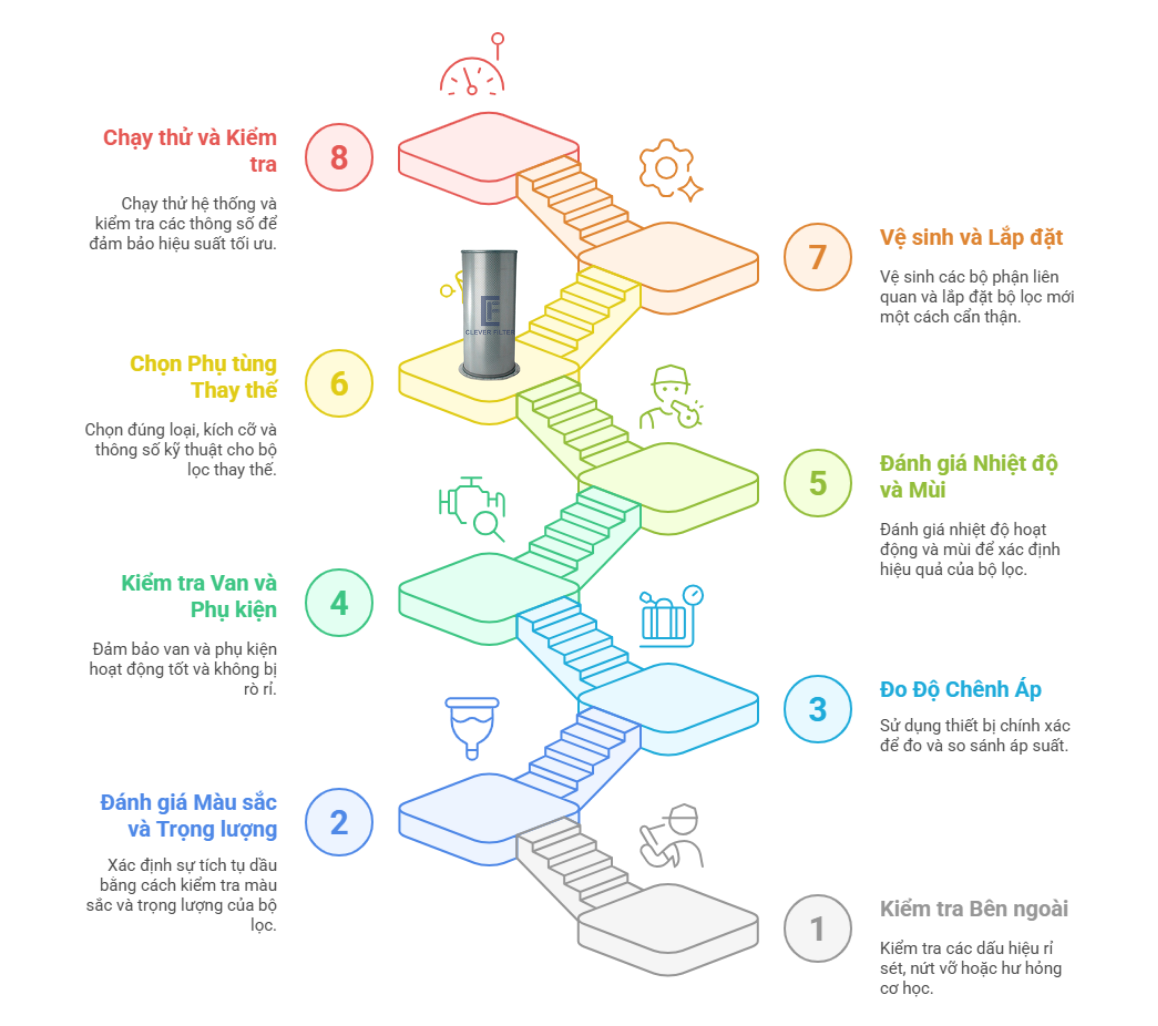
Steps to periodically check the oil separator filter
To maintain maximum efficiency of the oil separator , periodic inspection is indispensable. The inspection procedure includes specific steps to determine the operating status of the filter, avoiding excessive dirt or damage leading to undesirable consequences.
First, inspect the overall exterior of the filter for signs of rust, cracks, or mechanical damage. Next, check the color and weight of the filter to determine if there is a buildup of oil. If differential pressure can be measured, use an accurate measuring device to compare it to the standard.
Also, check the exhaust valves and accessories to ensure they are working properly and are not leaking or stuck. Finally, look for signs of operating temperature and odor of the exhaust gas, to assess whether the filter is still working effectively or needs to be replaced.
Instructions for measuring differential pressure accurately
Measuring the differential pressure is an important step in determining the condition of the oil separator. This measuring system can be an integrated sensor or a manual pressure gauge. To achieve accuracy, the following principles should be followed:
- Place the sensor or pressure gauge accurately at both ends of the filter, ensuring the gasket slots are tight and free of air leaks.
- Measure regularly according to the set schedule, especially under continuous operating conditions or after the machine has been running stably for at least 1 hour.
- Record data over time to track trends, detect sudden changes or exceed set thresholds.
- In the absence of a sensor, a manual pressure comparison method can be used to measure the pressure before and after the filter using a gauge.
Accurate measurement helps predict when filters need to be cleaned or replaced, avoiding excessive clogging or energy loss.
Factors to consider when replacing oil separator
Replacing the oil separator filter according to the correct procedure is a decisive factor in the operational efficiency of the compressed air system. Some points to note include:
- Choose the right type, size and specification : check the label, specification, brand or code number on the old filter to buy the right genuine or OEM part.
- Use suitable accessories : gaskets, drain valves or metal guides containing electrical wires to avoid static electricity during replacement.
- Clean the relevant parts thoroughly before installing the new filter to avoid dust, oil or impurities from entering the system.
- Carry out the installation carefully and correctly , without leaving any gaps, without being too loose or too tight, to ensure safety and stable operation.
Once completed, test run and check the output air condition, pressure, temperature to ensure the filter is working properly.
Advice on using the right accessories and spare parts
The selection of accessories and spare parts always plays an important role in the maintenance of pneumatic systems. Choosing the right genuine or OEM products helps ensure durability, suitable technical features, avoid the risk of energy loss, minimize sudden machine downtime or unexpected breakdowns.
Operators should give priority to imported filters that are of high precision, clearly tested for quality standards, and can be easily replaced when it is time for maintenance.
In addition, training technicians on how to install, replace and periodically check these spare parts will help save costs, improve understanding, thereby minimizing incidents related to incorrect techniques or use of poor quality spare parts.
Conclude
Air compressor oil separator is not only an auxiliary component, but also the main shaft to ensure clean compressed air, improve operating efficiency and service life of the entire system. From the operating principle based on centrifugal force, suitable installation location, to recognizing signs of damage, inspection, maintenance and replacement procedures with correct techniques, all require precision and care.