WCS system concept and its role
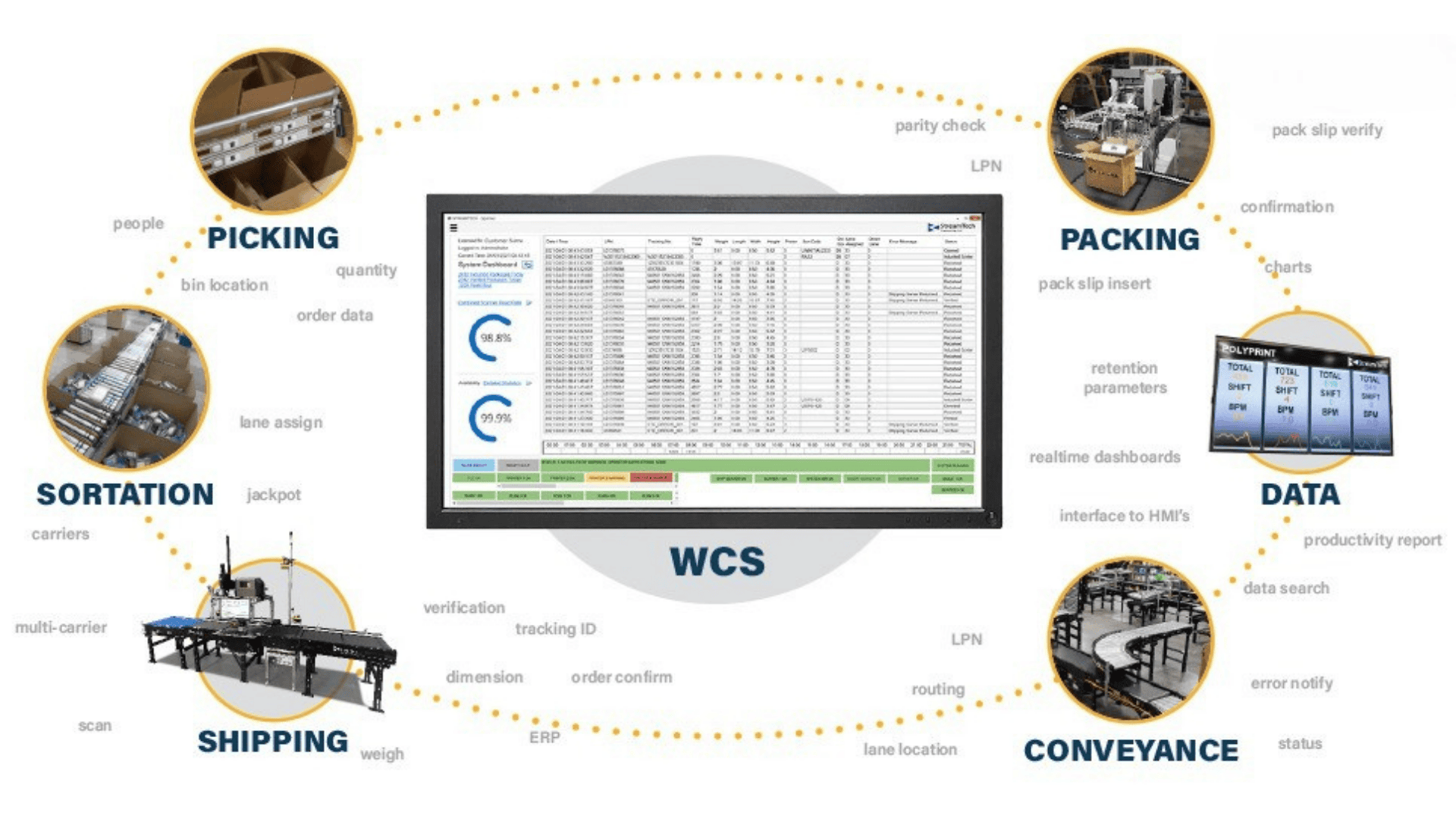
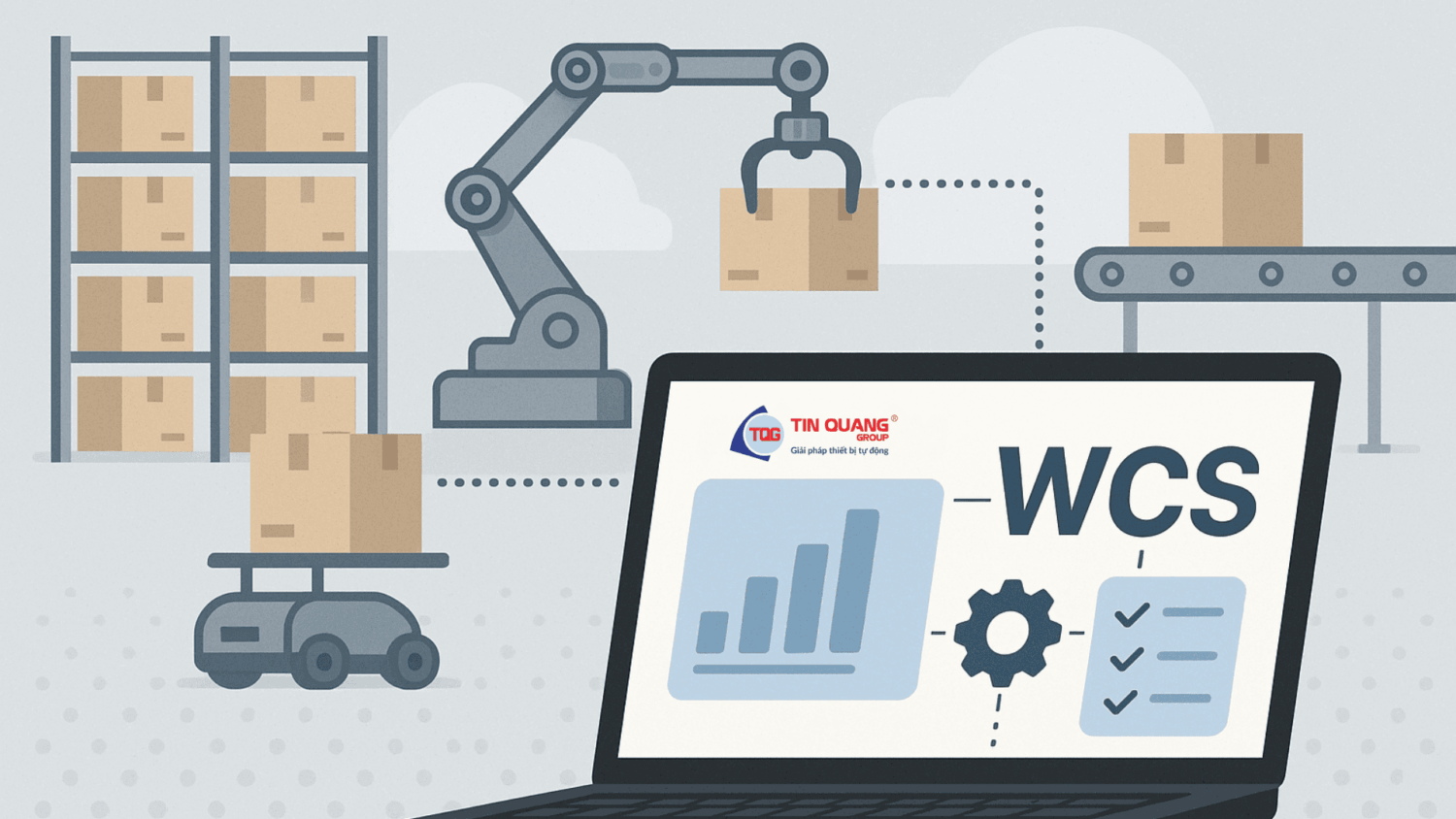
Warehouse Control System (WCS) is a specialized software solution, built to manage, monitor and improve the performance of equipment and automation processes in the warehouse. The main functions include controlling and monitoring components such as automatic storage and retrieval systems (AS/RS), conveyor systems, conveyor belts, shipping areas, and other equipment related to the storage and transportation process of goods, typically forklifts, sorters and palletizers, etc.
Outstanding features of WCS warehouse control system
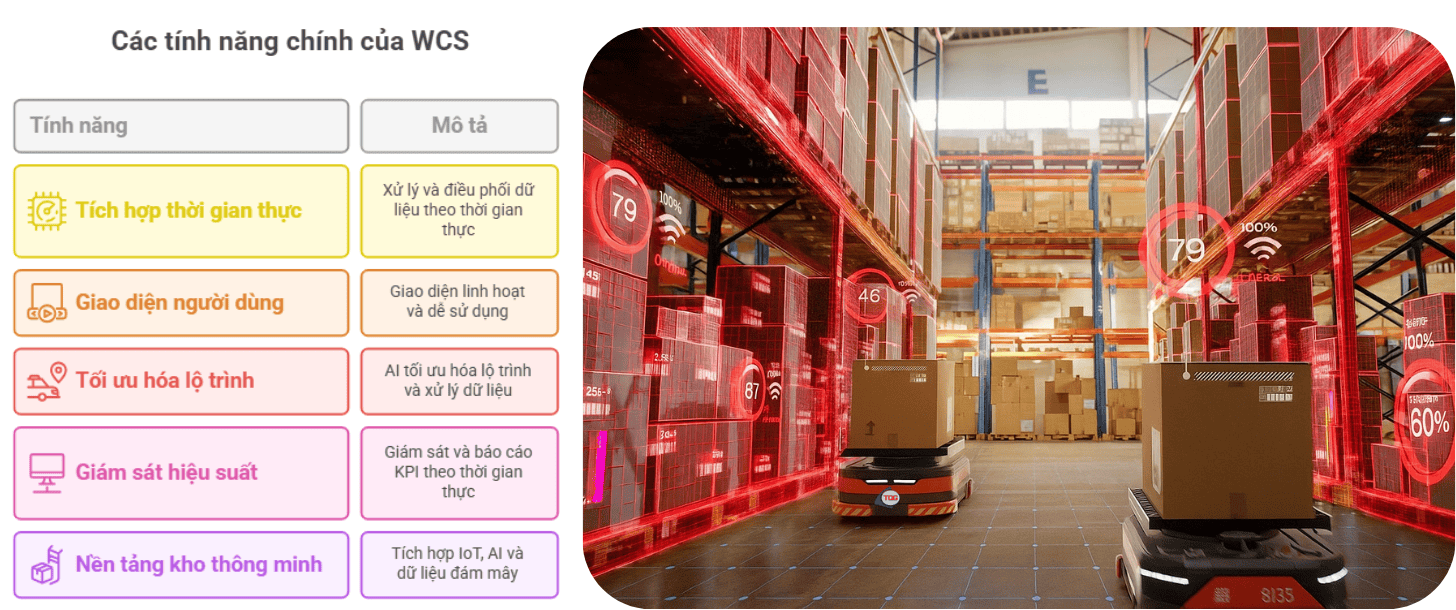
It is no coincidence that many large corporations in the world and in Vietnam have begun to apply WCS in warehouse management. The outstanding features of this system are the tight integration of technology, the ability to process data in real time, and high flexibility in operation. Below are the highlights that make WCS the optimal solution in modern warehouse management.
Real-time integration and precise dispatching capabilities
In a warehouse, speed of response and the ability to coordinate automated equipment are key. WCS has the ability to connect and process data in real time, ensuring that everything from order reception, sorting, shipping and storage is continuous, accurate and efficient.
Flexible interface, easy to operate for warehouse staff
One of the important criteria contributing to the success of WCS is the user-friendly interface, easy to operate, suitable for technical staff as well as warehouse staff. Current WCS software often integrates intuitive, easy-to-customize reports, dispatch commands or device status checking operations.
Optimize routing and intelligent data processing
AI-based routing optimization algorithms and Big Data analytics help WCS identify the best shipping routes in the warehouse. This process not only reduces travel time and saves energy, but also increases accuracy in handling goods.
In addition, these systems integrate sensors, PLCs and data analysis methods to predict equipment status, thereby proactively providing maintenance measures, limiting incidents, and optimizing long-term operating performance.
Real-time performance monitoring and reporting capabilities
WCS provides comprehensive monitoring of the entire warehouse operation based on data from devices and sensors. Key performance indicators (KPIs) such as processing speed, error rate, energy consumption, and equipment status are continuously updated, making it easy for management to make appropriate adjustments.
This function also supports businesses in forecasting, planning, and making long-term strategic decisions. Reports are displayed clearly and intuitively, helping managers easily grasp unusual problems and quickly handle them to minimize damage and improve productivity.
Platform for Smart Warehouse
The combination of WCS, IoT, AI and cloud data has created the concept of smart warehouse – where all operations are optimized, automated and able to flexibly adapt to market demands. In smart warehouses, WCS plays a central role, connecting sensors, autonomous robots, and automatic storage systems to help businesses operate without much manual intervention.
WCS operating procedure in automated warehouse
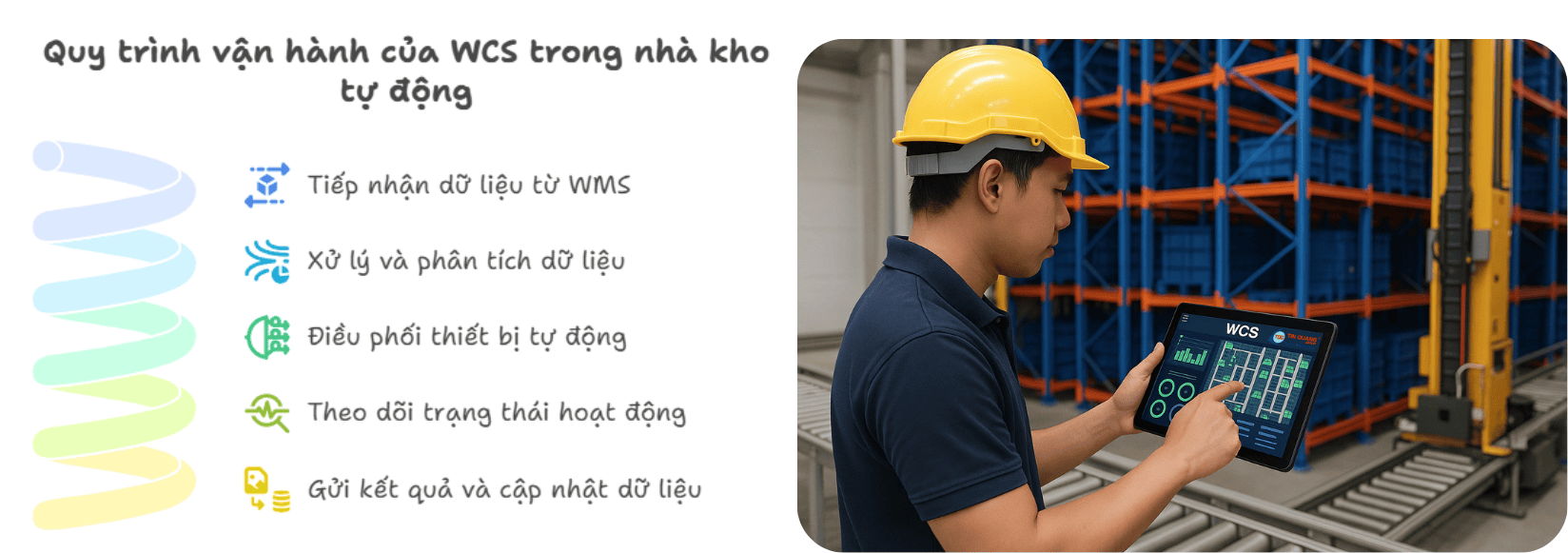
Steps to receive and process data from WMS
The WCS system starts working when it receives data from the WMS warehouse management system, related to new orders, inventory locations, and shipping coordination requests. This data is processed and analyzed immediately to determine the appropriate and accurate orders with the current situation.
Coordinate automated equipment such as conveyors, robots, sensors
Based on the processed data, WCS will send coordination commands to automatic devices such as conveyors, AGV robots, and sensor systems. In which, AGV robots will be automatically navigated to predetermined locations to move goods, and the sorting conveyor will work continuously according to the optimized schedule.
The equipment operates based on precise control commands, combined with sensors to promptly detect problems such as jams, malfunctions or errors. This automated warehouse not only reduces waiting time but also improves accuracy, safety for workers and equipment, bringing high efficiency in long-term operation.
Monitor operational status and detect errors
During operation, WCS continuously monitors the status of equipment through sensors, PLCs and status sensing systems. When there is a problem or improper operation, the system will automatically send a warning or a pause command for handling.
Send results and update data to the central management system
After completing the tasks, WCS will send the latest performance, operating status, and inventory data to the WMS system for updating. This update helps comprehensive management, easy analysis, and planning based on accurate, timely information.
Furthermore, this data also helps predict trends and customer needs, thereby suggesting appropriate adjustments to inventory import and export strategies or system upgrades.
Comparison between WCS and WMS systems
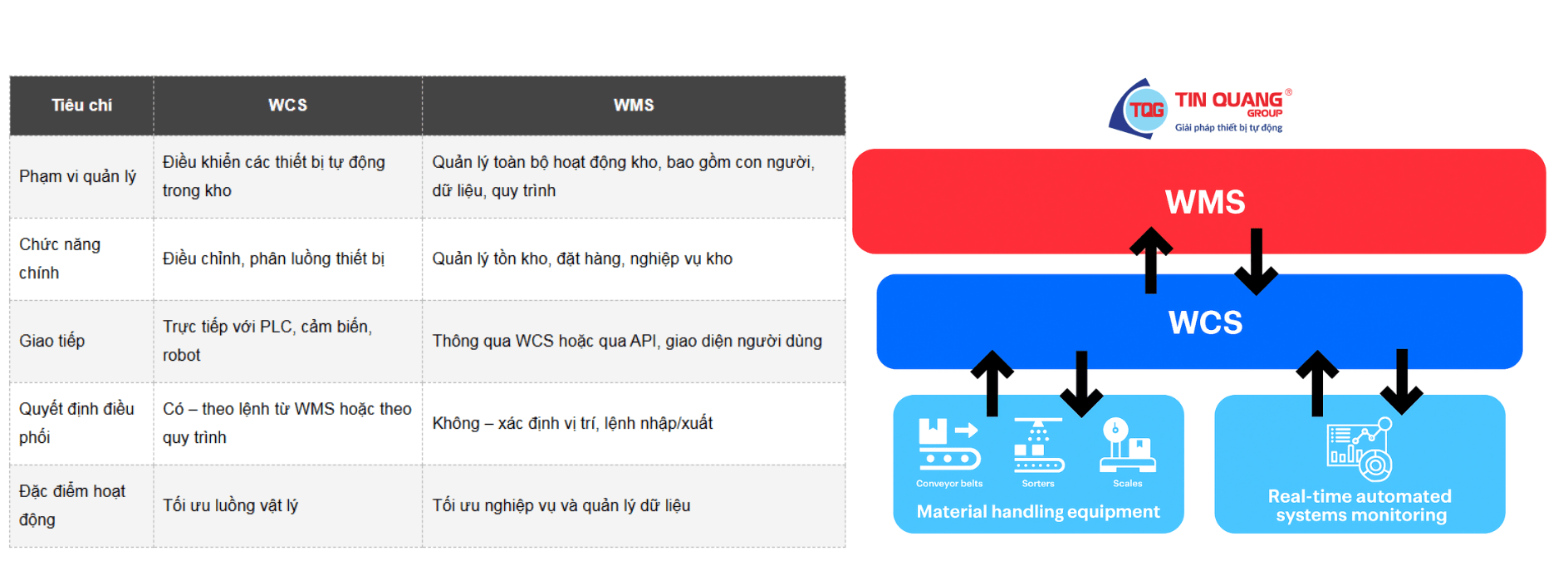
In the process of building a modern warehouse management system, we often hear two important terms: WCS and WMS. Although closely related, they have separate functions, scopes and roles. Understanding these differences will help businesses make reasonable considerations, maximize operational efficiency and develop long-term strategies.
Management scope and main functions of WCS and WMS
WMS (Warehouse Management System) is a comprehensive warehouse management system, focusing on activities of planning, inventory control, order processing, import and export inspection… It helps businesses optimize storage and reduce errors during operations.
Meanwhile, WCS (Warehouse Control System) focuses on operating automated equipment, supporting actual warehouse operations such as coordinating robots, conveyors, sensors, etc. In other words, WCS is like a control center for automated equipment, while WMS manages data and the overall logistics process. In modern systems, both often go together, complementing each other to build a comprehensive automated warehouse model.
Processing and decision making properties in each system
WMS operates on the basis of decisions about storage, classification, forecasting and planning based on inventory data, orders… It handles large volumes of data, supporting strategic decision making.
In contrast, WCS processes tasks in real time, based on control commands issued from the WMS system or central controllers. WCS does not analyze strategic data, but focuses on immediate processing to coordinate automated equipment as accurately and quickly as possible.
Device communication and role in the supply chain
WCS communicates directly with automated devices such as robots, conveyors, sensors, and AS/RS systems to adjust operations based on optimized commands. This is the key to rapid response in automated warehouses.
WMS rarely directly controls automated devices, but mainly sends commands and data to WCS for execution. The role of WMS is to set up plans and determine the processing direction, while WCS is the one who executes these commands in reality.
The mutually supportive relationship between WCS and WMS
WMS and WCS are not “opponents”, but rather a mutually supportive relationship. WMS proposes inventory management plans and makes strategic decisions, while WCS takes on the role of execution, optimizing operations in real time.
This coordination helps businesses manage comprehensively, integrate from strategy to operation, flexibly adapt to market needs, and improve supply chain efficiency.
When should a business combine these two systems?
Combining WMS and WCS is suitable for large-scale businesses with complex operations and high automation requirements, such as large distribution warehouses, leading e-commerce centers, and multi-line manufacturing plants.
In these models, integrating the two systems maximizes benefits, improving productivity, accuracy, and the ability to predict and detect potential problems early. Therefore, the sooner a business invests in this integrated system, the more obvious long-term benefits it will bring.
Which unit programs and deploys the comprehensive WCS system in Vietnam?
Tin Quang Group has many years of experience implementing warehouse automation projects for businesses in fields such as logistics, manufacturing, retail, e-commerce, etc. The team of engineers and experts understand the actual operating process , providing solutions suitable for each model.
Comprehensive Solution – Customized to Your Needs
- Not selling a “one-size-fits-all solution”, Tin Quang provides smart warehouse solutions designed specifically for each business.
- From warehouse management software (WMS) to robots, AGVs, conveyors, racking systems – all are integrated seamlessly.
Optimizing investment costs – Long-term efficiency
- Investment consulting support at each stage to suit the budget.
- Committed to increasing productivity, reducing staff, reducing errors , and quickly recovering capital.