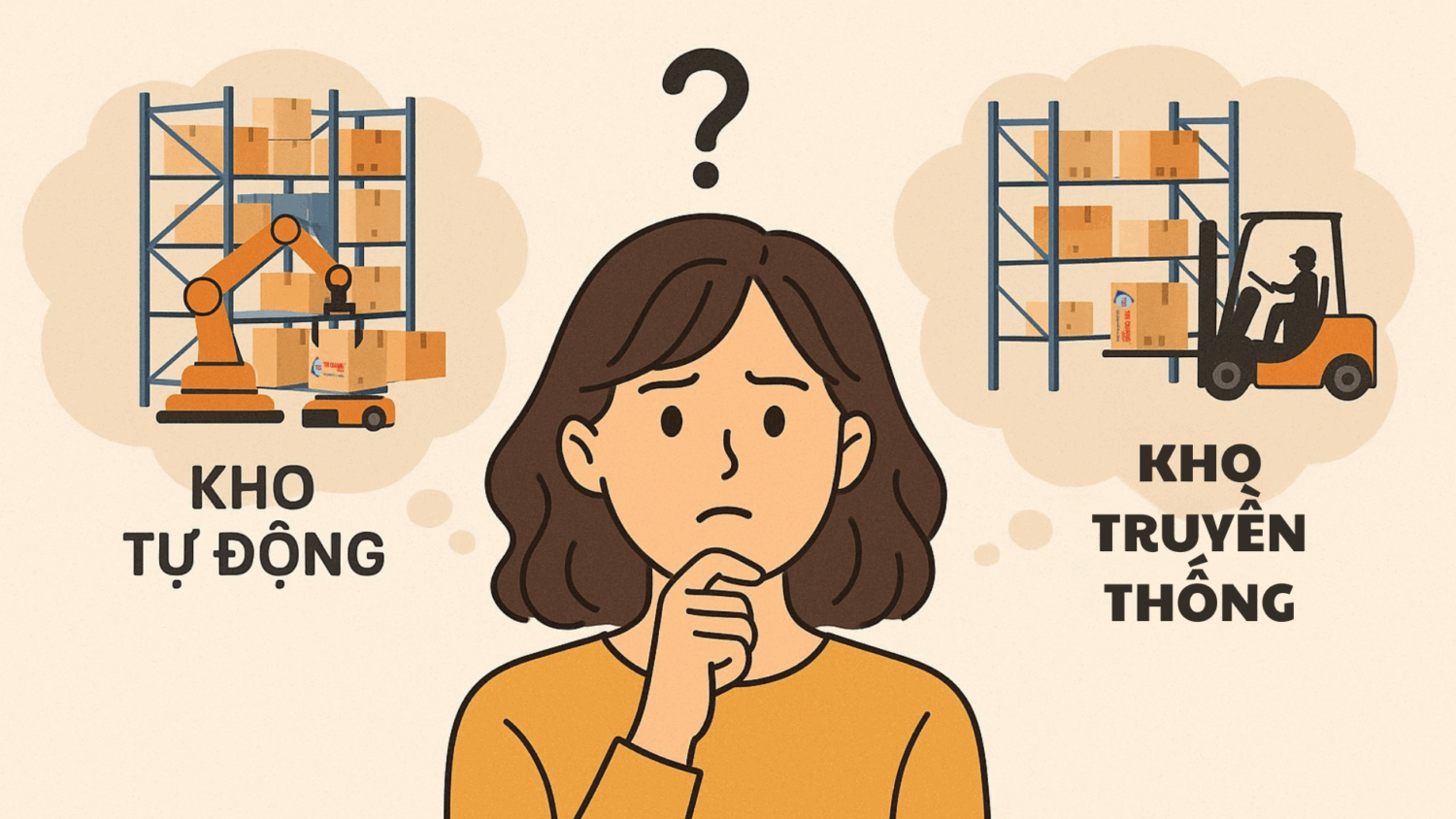
Automated warehouses and traditional warehouses – two popular warehouse management models in the era of industry 4.0. In the context of increasingly fierce competition, optimizing the process of storing, processing and transporting goods is the key to the success of businesses. Tin Quang Group will analyze these two types of warehouses in depth based on criteria of performance, cost, accuracy, scalability and suitability for each business size. By clearly understanding the advantages and disadvantages of each model, you will easily make the right choice to improve competitiveness, optimize logistics operations, and build a sustainable long-term development strategy.
Traditional warehouse – Characteristics and operating principles
Traditional warehouses are still popular models in many small and medium-sized enterprises, or in industries with simple storage processes. The operating principle is based on the coordination of humans and supporting tools such as forklifts, shelves, pallets, etc. Goods management is mainly based on manual operations, paperwork, and simple management software or even no specialized software.
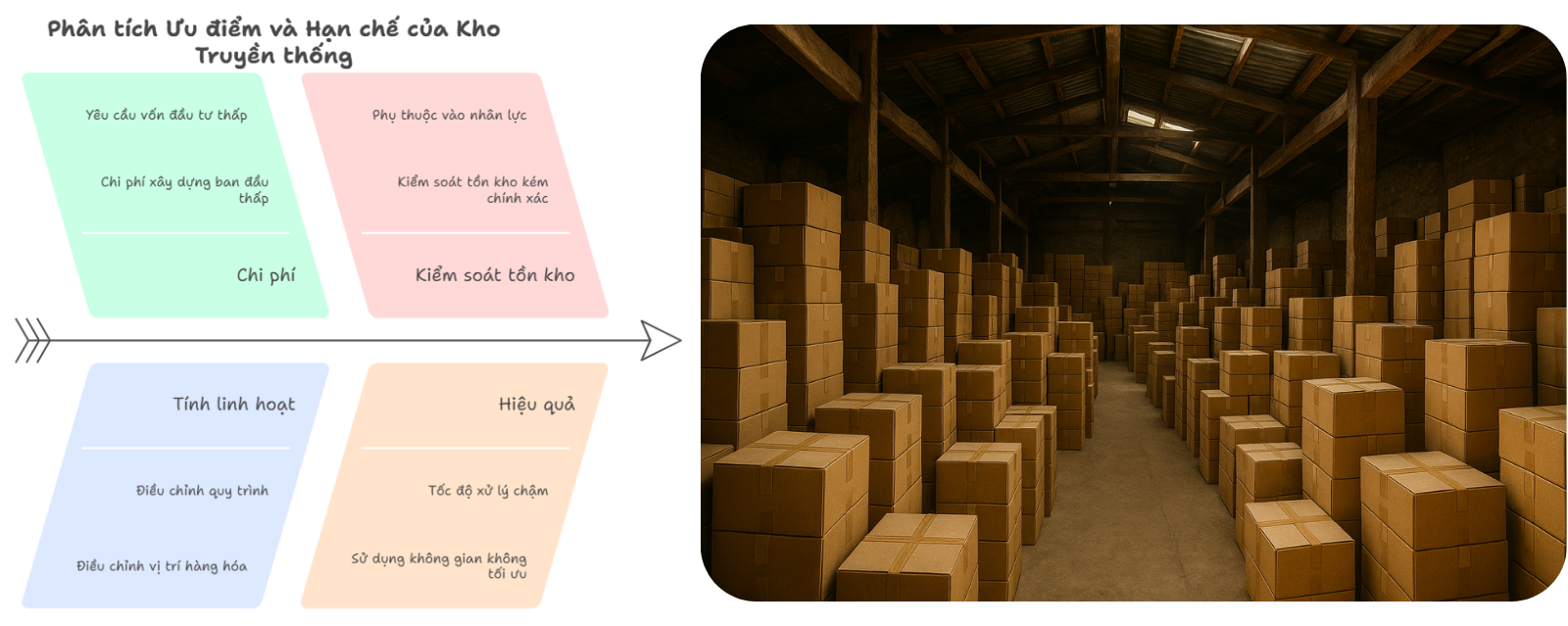
The outstanding advantages of traditional warehouses focus on low initial construction costs, small investment capital, and flexibility in adjusting processes or goods locations according to the actual requirements of the business. Suitable for small-scale businesses, small quantities of goods or those that do not require quick processing.
The limitations of traditional warehouses lie in less accurate inventory control, high dependence on human resources, prone to errors, slow processing efficiency, and suboptimal area usage due to the need for large spaces for aisles and shelves.
Automated warehouse – New operating method of modern logistics industry
With the advancement of technology, automated warehouses have become a new trend, especially in large corporations, e-commerce or high-end logistics . This system operates based on robots, sensors, modern management software, and comprehensive automation systems to optimize the process from warehousing to shipping. In automated warehouses, every step in the processing is coordinated accurately and quickly.
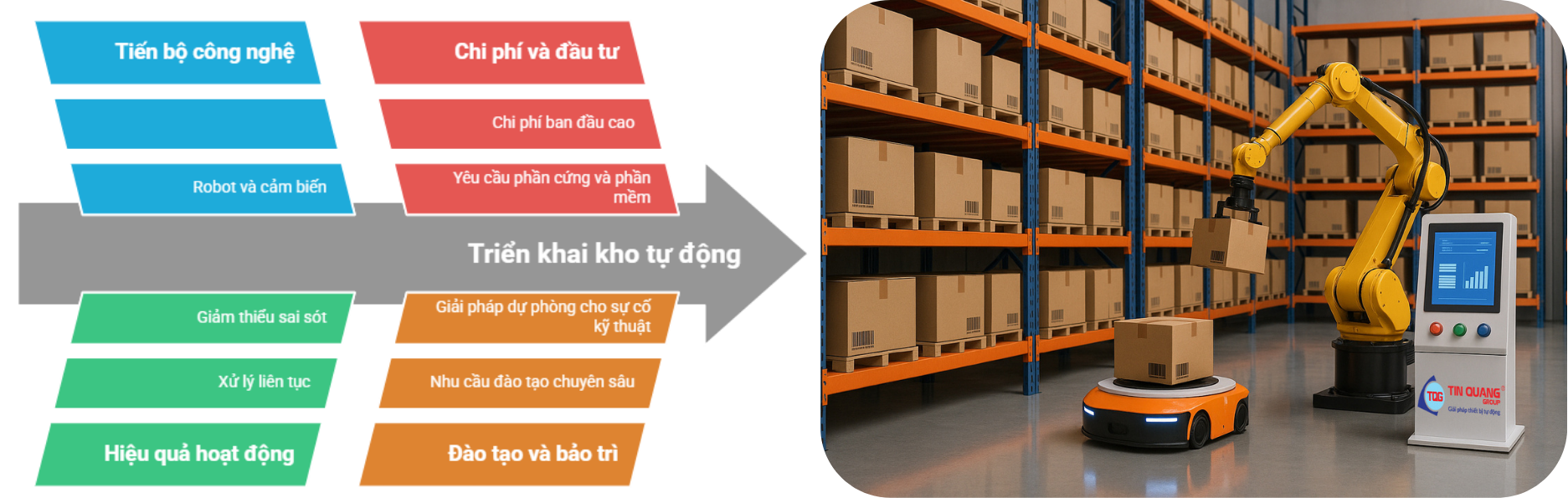
The advantages of automated warehouses include almost unlimited processing performance, the ability to operate continuously 24/7, minimizing errors, optimizing space thanks to smart shelving systems and flexible moving robots. In addition, the ability to easily expand the model helps businesses develop sustainably in the direction of automation.
The major drawback of this type of warehouse is the high initial investment cost, requiring complex and expensive hardware and software systems; in addition, employees need to be highly trained to monitor and operate the system. Technical problems can cause disruptions in operations if there are no suitable backup solutions.
Comparison of traditional warehouse and automated warehouse
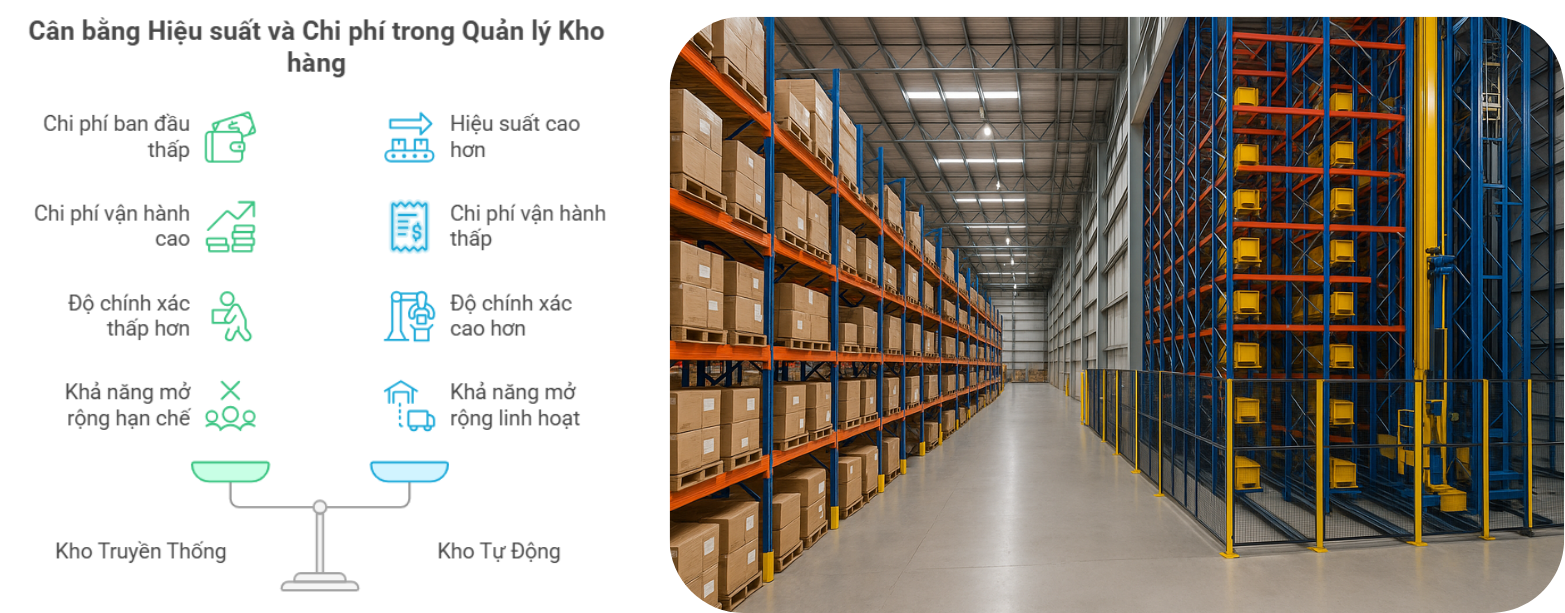
Performance – Who Wins the Warehouse Handling Race?
Performance is the deciding factor in meeting market demands, especially in the context of fast and highly accurate delivery times. Automated warehouses have a greater advantage in the ability to process goods in a short time and with almost absolute precision. Robots and automated systems can work continuously without fatigue, minimizing downtime, significantly increasing productivity.
Meanwhile, traditional warehouses are still heavily dependent on humans, prone to errors due to fatigue and lack of attention, especially when processing a large volume of goods in a short time. Although it can be expanded in scale, the process is still significantly slower than an automated system. In fact, large warehouses that process a large volume of daily orders often prioritize switching to an automated warehouse model to improve efficiency and competitiveness.
Operating Costs- Initial Investment and Long-Term Costs
Cost is always the top issue when businesses make decisions. Traditional warehouses save initial costs, are easy to build, and operate based on human resources, but have high operating costs in the long term due to the requirements for recruitment, training, salaries, and manual equipment maintenance.
In contrast, automated warehouses require a large initial investment, but once they are operating stably, maintenance costs in terms of human resources are significantly reduced. The cost of repairing and maintaining automated systems is not small, but in return, the productivity advantage brings greater revenue. Large enterprises often calculate long-term models, considering total costs to decide on appropriate investments.
Accuracy in management – Bringing customer trust
In the logistics industry, the accuracy of inventory data and service providers is the highlight of automated warehouses. Technologies such as RFID, barcode scanning systems, and WMS software help ensure that all goods are accurately tracked, limiting loss and errors in inventory or warehouse delivery.
Meanwhile, traditional warehouses are prone to errors due to manual operations such as data entry or incorrect product location, causing disruption in inventory management and affecting customer experience.
Scalability – Flexible to growing needs
Flexibility and scalability are the strengths of automated warehouses. Systems can upgrade hardware, software, integrate new robots or add smart shelves to match the growth of the business. Meanwhile, traditional warehouses face many limitations due to their dependence on space, human resources, physical processes, and difficulty in expanding quickly without affecting regular operations.
Should you choose a traditional warehouse or an automated warehouse for your business?
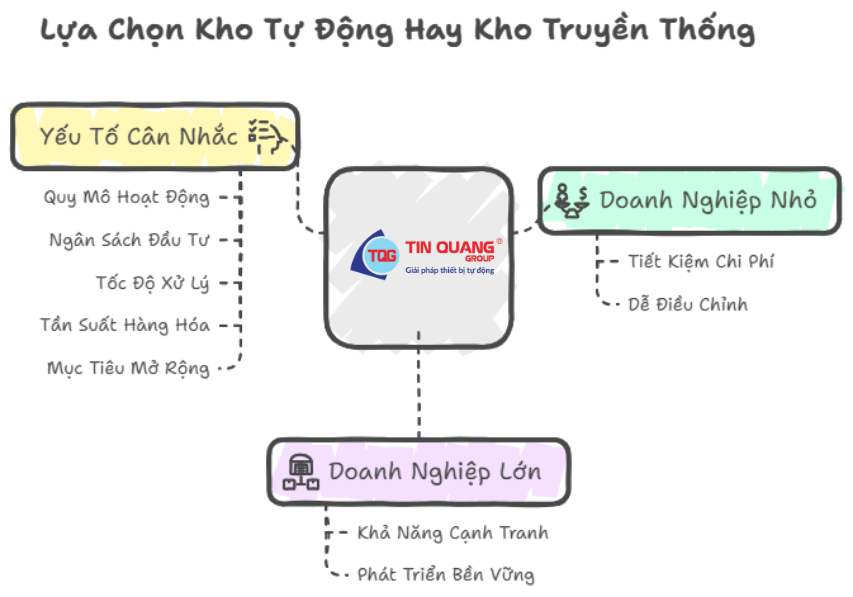
Choosing an automated or traditional warehouse depends largely on the size, budget, industry, and long-term goals of the business. Small, newly established businesses with limited budgets will prioritize building a traditional warehouse to save initial costs and easily adjust to reality.
Meanwhile, for large enterprises, especially in the fields of e-commerce, logistics or mass production, investing in automated warehouses is an inevitable step to ensure competitiveness and sustainable development. In addition, enterprises need to consider scalability, technology trends, and operational flexibility.
Several factors help businesses determine the best fit:
- Scale of operations and expected growth
- Initial investment budget and long-term operating budget
- Requirements for processing speed and accuracy
- Frequency and volume of goods handled daily
- Goals for scaling or improving performance
Consulting from experts in the field of warehouse automation is an indispensable step, helping businesses have a more comprehensive and accurate view in making decisions.
Professional and low-cost automated warehouse deployment unit in Vietnam

Đơn vị triển khai kho tự động chuyên nghiệp giá rẻ tại Việt NamTin Quang Group has many years of experience implementing warehouse automation projects for businesses in fields such as logistics, manufacturing, retail, e-commerce, etc. The team of engineers and experts understand the actual operating process , providing solutions suitable for each model.
Comprehensive Solution – Customized to Your Needs
- Not selling a “one-size-fits-all solution”, Tin Quang provides smart warehouse solutions designed specifically for each business.
- From warehouse management software (WMS) to robots, AGVs, conveyors, racking systems – all are integrated seamlessly.
Optimizing investment costs – Long-term efficiency
- Investment consulting support at each stage to suit the budget.
- Committed to increasing productivity, reducing staff, reducing errors , and quickly recovering capital.